
About Pellets
Troubleshooting Wood Pellet Burn Issues: A Simple Guide
Nearly every pellet burn problem traces back to one of three things: a stove that needs cleaning, fuel that got damp, or an air-to-pellet ratio that’s out of balance.
Work through those three — in that order — and you’ll solve most burn issues without a service call. Here’s how.
Step 1: Start With a Clean Stove
Mama always said: a clean stove is a happy stove. Before adjusting anything, rule out the most common culprit — ash and soot buildup.
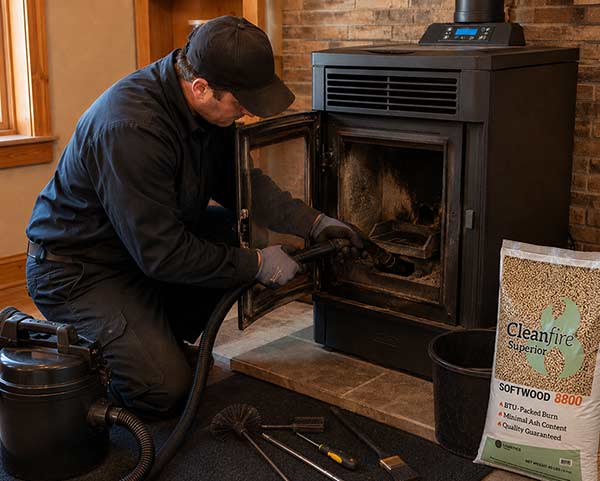
Throughout the heating season:
- Every few days: empty ash from the burn pot and clean the heat exchanger fins. For most stoves in regular use during the winter, that’s about every 3 days.
- Weekly: give the stove a thorough cleaning — glass, burn pot, fire walls, heat exchanger, and ash pan.
- Monthly: follow the maintenance checklist in your stove manual.
- Yearly: have your stove professionally cleaned and serviced once a year.
A professional service should cover the hopper, auger and auger motor, combustion and convection blowers, all seals and gaskets, exhaust pipes and outside venting, wiring, sensors, the igniter, and the entire fire chamber. A little preemptive work saves a whole lot of headache in January. Need a reliable stove tech? Give us a call at 1-800-PELLETS.
Step 2: Rule Out the Fuel
Before blaming the stove, take 60 seconds to check your pellets:
- Look: pellets should be hard and glossy. Swollen, dull, or crumbly pellets absorbed moisture somewhere along the way — don’t burn them.
- The sink test: drop one in a glass of water. Premium, well-compressed pellets sink.
- Connect the dots: damp pellets ignite poorly, burn cool and lazy, and leave more ash. If your problems started with a new bag or a skid stored outside, the fuel is suspect #1.
Related reading: How to Store Wood Pellets and What Makes a Premium Pellet?
Step 3: Read the Flame
Your flame is the best diagnostic tool you own. A healthy pellet flame is bright yellow-white, steady, and active — dancing, not roaring, not drooping.
- Lazy, dark-orange flame with sooty tips: the fire is starving for air.
- Roaring, blowtorch-like flame: it’s getting too much air.
Nearly every burn-quality fix on this page comes down to rebalancing three settings: feed rate (how fast pellets drop), airflow (damper/combustion air), and heat setting. Your stove needs all three in balance — even the best pellets can’t overcome settings that are out of whack.
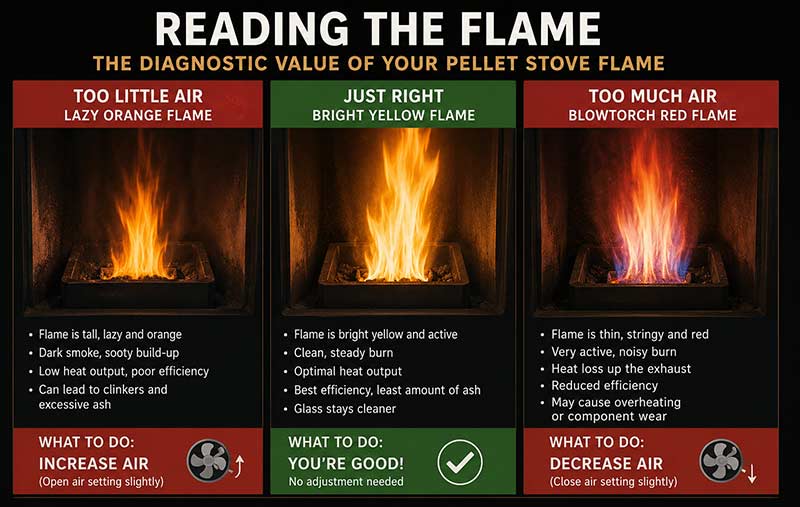
Golden rule of adjustment: change one setting at a time, in small increments, and give the stove 10–15 minutes to respond before changing anything else.
Quick Reference: Burn Quality Problems
| The Problem | The Likely Culprit | The Solution |
|---|---|---|
| Lazy, dark-orange flame with sooty tips | Not enough combustion air | Increase airflow/open damper slightly; clean the burn pot so air holes are clear; check for ash blocking air passages. |
| Roaring, blowtorch-like flame; sparks or live embers in the ash pan | Too much combustion air | Decrease airflow/close damper slightly. |
| Whole or charred pellets piling up in the burn pot | Overfeeding, or not enough air to keep up | Decrease feed rate and/or increase airflow; empty and clean the burn pot before relighting. |
| Low heat output | Dirty heat exchanger, underfeeding, or unbalanced air | Clean heat exchanger and exhaust paths first; then increase feed rate in small steps and rebalance airflow. |
| Blackened glass in a day or two | Smoldering on ‘low’, weak airwash, or leaking door gasket | Run at medium or higher for part of each day; clean the glass and airwash inlets; inspect/replace the door gasket. |
| Excessive clinkers (hard, fused ash chunks) | High-ash or contaminated fuel, or a dirty burn pot running hot | Clean the burn pot; verify airflow settings; switch to a premium low-ash pellet. If clinkers persist, have gaskets and venting checked. |
| Trouble igniting | Damp pellets, a dirty burn pot, or a weak igniter | Try pellets from a fresh, dry bag; clean the burn pot and igniter channel; if ignition stays slow, have the igniter tested/replaced. |
| Excessive ash everywhere | High-ash fuel or incomplete combustion | Switch to verified low-ash pellets; rebalance air and feed; keep to your cleaning schedule. |
Quick Reference: Feeding & Shutdown Problems
| The Problem | The Likely Culprit | The Solution |
|---|---|---|
| Auger jamming | Extra-long pellets, foreign object, or fines buildup | Check for a foreign object in the auger chamber. Also check for a buildup of fines and clinkers. Finally, check the pellet fuel for long pellets; vacuum fines out of the hopper regularly. |
| Burning through pellets fast, with charred leftovers falling into the ash pan. | Short pellets over-feeding (more fuel per auger turn) | Reduce the feed rate. |
| Stove shuts down mid-burn | Empty hopper, blocked venting, or a dirty/faulty sensor or switch | Check hopper and refill; inspect venting for blockages (nests, ash); if shutdowns repeat, schedule professional service. |
Every stove is different — your stove manual is always the tiebreaker, and settings that work for one brand of pellets may need a small tweak when you switch brands or start a new shipment. That’s normal.
When to Stop and Call a Pro
Most burn issues are settings and cleaning. But some symptoms mean shut it down and get help:
- Smoke or soot entering the room — possible venting leak or failed gasket.
- A carbon monoxide alarm — leave the house, then get the system inspected before relighting.
- Repeated shutdowns after you’ve cleaned the stove and checked the vent.
- Grinding or squealing from the auger or blowers. This could indicate that the motor may be on it's way to failing.
- Any electrical smell, scorching, or error codes that keep returning.
Your safety is worth more than a service fee. When in doubt, make the call: 1-800-PELLETS.
Frequently Asked Questions
Why is my pellet stove flame lazy and orange?
A lazy, dark-orange flame means the fire isn’t getting enough combustion air. Clean the burn pot so its air holes are clear, then increase the airflow or open the damper slightly. A healthy flame is bright yellow-white and active.
Why are there unburned pellets in my burn pot?
Whole or charred pellets left in the burn pot mean the stove is feeding more fuel than the fire can burn — either the feed rate is too high or there isn’t enough air. Decrease the feed rate and/or increase airflow, and clean the burn pot before relighting.
What causes clinkers in a pellet stove?
Clinkers — hard, fused chunks of ash — form when ash melts and re-hardens in the burn pot. The most common causes are high-ash or contaminated fuel and a dirty burn pot. Clean the burn pot, check your airflow, and switch to a premium low-ash pellet. Persistent clinkers warrant a professional check of gaskets and venting.
Why does my pellet stove glass turn black?
Glass blackens quickly when the stove smolders on low for long periods, or when the airwash system is dirty or a door gasket is leaking. Run the stove at medium or higher for part of the day, clean the glass and airwash inlets, and inspect the gasket.
How often should a pellet stove be professionally serviced?
Once a year or every 2–3 tons of pellets, whichever comes first — in addition to your own weekly and monthly cleaning routine.
Can bad pellets cause stove problems?
Yes. Pellets that absorbed moisture ignite poorly, burn cool, and leave excess ash, and high-ash fuel causes clinkers and extra cleaning. Check that pellets are hard and glossy, and buy fuel that’s independently tested for ash and moisture.