
About Pellets
How to Store Wood Pellets: Storage & Handling Guide
Wood pellets have exactly one enemy: moisture. Keep your fuel dry, off the ground, and covered, and it will burn perfectly — this season or three seasons from now.
Here’s everything you need to know to protect your investment, whether you store your pellets in a garage, a basement, or out in the yard.
Why Dry Storage Matters So Much
Premium wood pellets leave the mill with just 4–6% moisture — that’s what makes them burn so hot and clean. But that same dryness makes them act like a sponge.
If pellets get wet, they swell, crumble, and turn back into what they started as: sawdust. There’s no drying them out and no saving them. Worse, swollen or crumbling pellets can jam your stove’s auger — so never pour questionable pellets into your hopper.
One soaked bag is a bummer. A soaked skid is a lost winter of fuel. Ten minutes of storage prep is the cheapest insurance you’ll ever buy.
The Golden Rules
Every season, every setup, it comes down to five things:
- Keep pellets dry — protect from rain, snow, ground moisture, and humidity.
- Keep them off the ground — store bags on the manufacturer’s pallet, never directly on concrete or soil.
- Keep them covered — intact shroud outdoors, or indoors away from damp.
- Keep them clear of your stove — store fuel outside your stove’s required clearance zone, like any combustible.
- Check on them occasionally — a two-minute inspection catches small problems before they soak in.
Indoor Storage (Best Option)
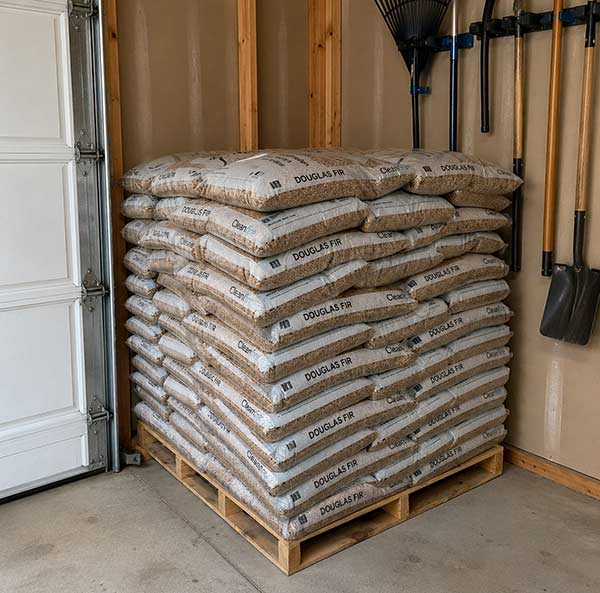
A garage or basement is the ideal home for your pellets: out of the weather and easy to reach in February slippers.
- Pick a dry spot: choose an area free from flooding, leaks, and excessive humidity. If your basement runs damp, run a dehumidifier nearby — pellets will slowly absorb moisture straight from humid air.
- Keep them elevated: restack bags on the manufacturer’s pallet and cardboard slip sheet. Concrete floors wick moisture, and even a small garage floor puddle can soak into bottom bags.
- Mind the weight: a full one-ton skid is 50 forty-pound bags on a roughly 4’×3.5’ footprint. Garage and basement slabs handle it easily — just plan your spot before delivery day, because nobody restacks a ton twice.
- Keep a clear path: leave room to grab bags without climbing. A 40-lb bag lifted awkwardly off a shoulder-high stack is how heating-season back injuries happen.
Outdoor Storage (Done Right)
No room inside? No problem — thousands of our customers store pellets outdoors all year. The key is a high, dry spot and an intact protective layer.
- Location first: a shed or shelter is best. Otherwise choose high ground with no pooling water, away from sprinkler and irrigation spray paths.
- Inspect on arrival: check the factory plastic shroud when your fuel is delivered. Repair any rips or punctures immediately with waterproof tape or extra plastic sheeting.
- Add a tarp: we strongly recommend a securely fastened tarp over the entire skid. It shields the shroud from sun and rain — and from the birds and squirrels that treat factory plastic as a chew toy.
- Leave breathing room: drape the tarp so air can circulate at the base. A tarp sealed tight to the ground traps condensation underneath — the very moisture you’re defending against.
- Patrol for critters: check occasionally to make sure the chipmunks haven’t formed a condo association under your skid.
Season-by-Season Storage Calendar
| Season | Your storage to-do list |
|---|---|
| Summer | Choose a delivery spot with no pooling water, sprinklers, or overhanging trees. Tarp the skid. Check on it occasionally. |
| Fall | Open the shroud from the top only — leave the rest on as long as possible. Re-cover with the tarp and weigh it down. |
| Winter | Shovel a path to your fuel and clear snow around the entire skid. Keep the shroud and tarp in place. |
| Spring | Move leftover bags indoors (or keep them covered outside). Empty your stove’s hopper. Reserve next season’s fuel early. |
Fall: opening your fuel the right way
When it’s time to fire up the stove, don’t strip the skid bare. Slice the shroud along the top edge and slip bags out from the top. Leave the shroud in place as long as possible, re-cover with your tarp, and weigh it down. The wrap you leave on is the protection your February bags depend on.
Spring: don’t forget your stove
Empty the hopper completely at the end of the season. Pellets left sitting in the hopper all summer absorb humidity, swell, and can corrode components or jam the auger come October. Store leftover bags indoors, and keep an eye out for our Spring Buy specials — reserving early means locking in price and supply before the fall rush.
Opened Bags & Everyday Handling
- Reseal opened bags with a clip or fold-and-tape — an open bag in a damp room is slowly ruined fuel.
- Inspect before you pour: pellets should be hard and shiny. If a bag’s contents look swollen, dull, or crumbly, don’t risk your auger — set it aside.
- Lift smart: 40 pounds is real weight. Lift with your legs, or slide bags onto a hand truck for longer carries.
- Storing bulk (loose) pellets? Keep bins ventilated. Large enclosed quantities of pellets can off-gas carbon monoxide in sealed, unventilated spaces — not a concern for bagged fuel in a garage, but important for bulk bins and silos.
How Long Do Wood Pellets Last?
Stored dry, wood pellets last indefinitely.
There’s no expiration date on pellet fuel — moisture, not time, is what ruins it. Pellets stored properly this year will burn just as hot in two or three seasons. That’s why buying ahead during spring specials is one of the smartest moves a pellet stove owner can make.
Ready for Next Season?
Reserve your winter fuel months in advance with just a $100 deposit — you’ll lock in early pricing, skip seasonal shortages, and we’ll deliver free, right where you want it. (Tape up a sign that says “PELLETS HERE” and consider it done.)
Reserve Your Pellets for Fall →Free Delivery Options · Our Quality Promise · Questions? Call 1-800-PELLETS
Frequently Asked Questions
What happens if wood pellets get wet?
Wet pellets swell, crumble, and revert to sawdust — permanently. They can’t be dried out and reused, and they can jam your stove’s auger. Discard any pellets that have gotten wet.
How long do wood pellets last in storage?
Indefinitely, as long as they stay dry. Moisture — not age — is what ruins pellet fuel. Properly stored pellets burn just as well after several seasons.
Can I store wood pellets outside?
Yes. Keep the skid on high, dry ground, maintain the factory shroud (repair any punctures with waterproof tape), and secure a tarp over the top while allowing airflow at the base.
Can I store wood pellets in my house or basement?
Absolutely — a dry basement or garage is the best storage there is. Keep bags on a pallet off the concrete, away from damp areas, and outside your stove’s clearance zone.
How much space does a ton of pellets take?
One ton is 50 forty-pound bags, delivered on a pallet roughly 4 feet wide by 3.5 feet deep, stacked about 4 feet high — it fits comfortably in the corner of a single garage bay.
Should I empty my pellet stove’s hopper in the off-season?
Yes. Pellets left in the hopper over the summer absorb humidity, which can swell the pellets, jam the auger, and corrode components. Empty the hopper as part of spring cleaning.