
About Pellets
Welcome to Wood Pellets 101
New to pellet heat? You’re in the right place. This is your starting point: what wood pellets are, how they work, and why millions of homeowners heat with them. When you’re ready to go deeper on any topic, we’ll point you to the full guide.
Why Heat With Wood Pellets?
- Save money on your heating bills, with fuel prices that don’t ride the global oil rollercoaster.
- Strengthen your local economy — pellet fuel is made and delivered regionally, supporting jobs for folks you know.
- Shrink your environmental footprint with a renewable fuel recycled from sawmill byproducts.
- Enjoy cleaner, easier heat than oil, propane, or electric — or even cordwood, without the splitting, stacking, and smoke.
What Are Wood Pellets?
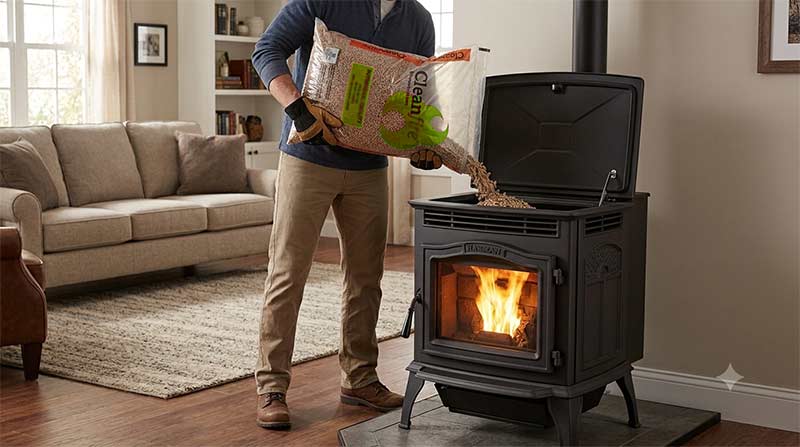
Wood pellets are a compressed, all-natural heating fuel about the size of a pencil eraser — roughly ¼ inch across and up to 1½ inches long.
Most pellets aren’t made by cutting trees. They’re made by recycling: the clean sawdust and shavings left over when lumber mills and wood product manufacturers (furniture, flooring, and more) do their work. That material — much of which once went to landfills — is dried to just 4–6% moisture and compressed under tremendous pressure. The natural lignin in the wood binds each pellet together, so there are no glues, chemicals, or additives. Ever.
The result is a dense, dry, uniform fuel that packs more heat into less space than cordwood, stacks neatly in 40-lb bags, and feeds automatically through your stove.
- → Curious why pellets come in different colors and sizes? See our guide to pellet appearance.
- → Hardwood or softwood? The answer will surprise you — read the comparison.
How Pellet Heat Works
A pellet stove is refreshingly simple to live with. Pour a bag of pellets into the hopper, set your desired heat level, and the stove does the rest: an auger feeds pellets to the burn pot at a controlled rate, a fan feeds the fire exactly the air it needs, and a blower pushes the warmth into your room. Most models auto-ignite and run on a thermostat just like your conventional heating system.
Because the fuel is dry and uniform and the combustion is computer-controlled, EPA-certified pellet stoves typically run at 70–83% efficiency, with a fraction of the smoke of a traditional wood stove. No splitting, no stacking, no hauling logs through the snow — just steady, even heat.
Pellet heat comes in every size: freestanding stoves, fireplace inserts, and whole-home pellet furnaces and boilers.
- → Shopping for your first stove? Read our pellet stove buying guide.
- → Stove acting up? Our simple troubleshooting guide covers the common burn issues.
Not Just Home Heating
Your pellet stove is part of something much bigger. The same engineered fuel heats and powers far more than living rooms:
- Commercial & institutional heating: schools, hospitals, municipal buildings, and businesses across the Northeast and Europe heat with pellet boilers — whole districts in Scandinavia run on biomass heat.
- Electricity generation: utility-scale power plants burn industrial-grade pellets in place of coal, one of the fastest ways to cut fossil carbon from an existing power station.
- Pellet grills & smokers: food-grade hardwood pellets have taken over the barbecue world — pellet grills use the same auger-fed technology as your stove. Check out our BBQ grilling pellets. (Grilling pellets are a different product than heating pellets — never swap one for the other.)
- Animal bedding: pellets’ absorbency makes them a popular choice for horse and livestock bedding, and even cat litter.
One humble recycled product; a lot of jobs to do.
How Pellets Save You Money
Pellet heat saves money in three ways:
- Stable, regional pricing. Heating oil and propane prices swing with global markets and geopolitics. Pellet prices are driven by regional supply, so they stay comparatively stable season to season; easier to budget, fewer nasty surprises.
- More heat per dollar. With stove efficiencies of 70–83% and fuel bought by the ton instead of the gallon, pellet heat consistently delivers more warmth per dollar than oil, propane, or electric resistance heat in most Northeast markets. One ton of pellets delivers about the same heat as 120 gallons of heating oil — run your own numbers with our savings calculator.
- Buy smart, buy early. Pellets are cheapest in the off-season. Reserve your fuel in spring with a $100 deposit, lock in early pricing, and skip the fall rush entirely.
Most homeowners burn about three tons per season (depending on home size, climate, and how much of the house you heat). Many states also offer rebates or incentives for installing efficient pellet appliances — check your state’s energy office for current programs.
Your Heating Dollars, Working Close to Home
Here’s the part that never shows up on a utility bill: where the money goes.
Spend a winter’s budget on heating oil and much of it leaves the region, and often the country. Spend it on pellet fuel and it stays remarkably close: regional loggers and truckers, the sawmill down the road, the pellet mill that recycles its residues, and the local crew that delivers to your driveway. Biomass heating keeps working forests working and supports thousands of forest-economy jobs across the Northeast.
Renewable, regional, and budget-friendly — that’s a rare combination in home energy.
Getting Started Is Easier Than You Think
- Pick your appliance. A local stove dealer can match a stove, insert, or furnace to your home and budget — we’re happy to point you to one we trust.
- Install it. Most installations are straightforward, and state incentive programs can help with upfront costs.
- Order your fuel. We deliver premium, independently tested pellets free to your driveway — or right into your garage. Store them dry and you’re set for the season.
The Pellet Experts
WoodPellets.com has delivered premium pellet fuel — more than 150,000 tons of it — since 2006, with a heaping side of award-winning customer service. Every pellet we sell is independently tested for heat, ash, and moisture, and covered by our Quality Guarantee.
Questions? That’s literally why we’re here.
Keep Learning
Frequently Asked Questions
What are wood pellets made of?
Compressed sawdust and shavings; clean byproducts of lumber and wood product manufacturing. The wood’s natural lignin binds them; there are no glues, chemicals, or additives.
How much do wood pellets cost compared to heating oil?
One ton of pellets provides roughly the heat of 120 gallons of heating oil. Pellet prices are regionally driven and comparatively stable, while oil follows global markets — in most seasons, pellet heat costs meaningfully less per unit of warmth. Compare with our savings calculator.
How many tons of pellets do I need for a winter?
Most homes burn about three tons per season depending on home size, climate, insulation, and whether pellets are your primary or supplemental heat.
Are wood pellets only used for home heating?
No — pellets also heat schools, hospitals, and businesses, fuel utility power plants in place of coal, fire barbecue pellet grills (food-grade versions), and serve as animal bedding.
Can I use heating pellets in my pellet grill?
No. Grilling pellets are food-grade, flavor-wood products; heating pellets are not made to food-safety standards. Use each for its intended purpose.