
About Pellets
High-Quality Wood Pellets Come in All Sizes and Colors
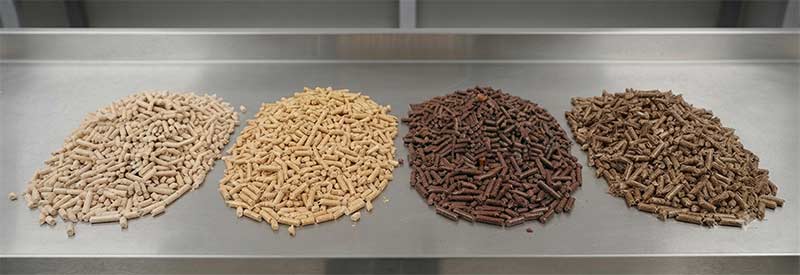
Premium wood pellets can look surprisingly different from brand to brand — blonde, brown, even reddish; longer or shorter. Appearance reflects the species of wood, not the quality of the fuel.
If you opened a bag this season and thought, “These don’t look like last year’s pellets — did I get a bad batch?” — you’re not alone. It’s one of the most common calls we get. The good news: in almost every case, what changed is the look, not the performance.
Here’s what pellet appearance can — and can’t — tell you.
Color: Species, Not Quality
Wood pellets range from pale blonde to warm brown, depending on the species of wood and how the fiber was processed.
As a general rule of thumb, lighter pellets tend to indicate clean, debarked wood fiber — and light blonde pellets are often (but not always) a sign of quality.
The big exception: Douglas Fir.
Pellets made from Douglas Fir have a distinctive reddish hue — and they’re some of the best-performing wood pellets on the planet. If your pellets look slightly red, that’s not a flaw. That’s the good stuff.
When color IS a warning sign
Be cautious with pellets that are very dark — darker than a cup of black coffee. Excessively dark color can mean bark was mixed into the raw material, and bark drives up ash content. More ash means more cleaning and less efficient burns.
But remember: color is a clue, not a verdict. The only way to know a pellet’s real quality is testing — which is why every pellet we sell is independently verified for BTUs, ash, and moisture.
Size: Length Varies, Performance Doesn’t
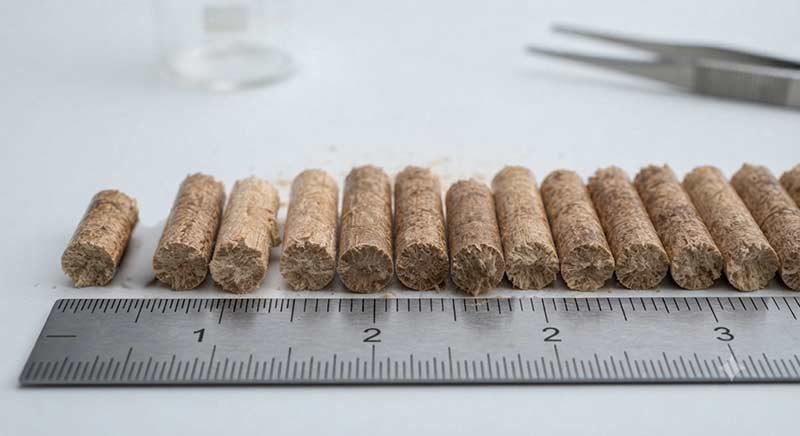
Every wood pellet has a uniform diameter — about ¼ inch (6 mm) — because it’s formed by the same size die at the mill. Length is where you’ll see variation: anywhere from ¼ inch to about 1½ inches is normal, and it can differ by brand or even by bag.
Most pellet stoves handle this entire range without any trouble.
If longer pellets ever give your stove trouble
A few auger systems are sensitive to longer pellets. If that’s your stove, you'll need to be more careful with selecting a fuel that meets the quality standards like our CleanFire brand of fuel.
What actually matters at the bottom of the bag isn’t length — it’s dust. A small amount of fines is normal from shipping and handling. Excessive dust can indicate soft, crumbly pellets that weren’t compressed well at the mill.
Density: The Difference You Can’t See
Wood pellets are compressed to roughly 40 pounds per cubic foot — several times denser than the raw wood fiber they’re made from. That density is what makes pellet stoves so efficient: uniform fuel means a steady, predictable, controlled burn.
There is a natural — and perfectly acceptable — variance in density from brand to brand, and even bag to bag. What matters is that every manufacturer we partner with is committed to producing consistent, durable, high-quality pellets.
What Pellet Appearance Can — and Can’t — Tell You
| What it CAN tell you | What it CAN’T tell you | |
|---|---|---|
| Color | Wood species; possible bark content if very dark | BTUs, ash %, or moisture — only testing shows these |
| Length | Normal mill-to-mill variation (¼″–1½″) | Quality — length has almost no effect on performance |
| Density / feel | Durability — solid pellets resist crumbling | Heat output — density is consistent across premium brands |
| Dust in bag | Handling & durability — some fines are normal | A little dust ≠ bad fuel; excessive dust is the red flag |
The Bottom Line
Different look, same standard.
Whether a pellet is blonde, brown, or Douglas Fir red, long or short, every pellet we sell has been independently tested and verified for heat output, ash content, and moisture — and backed by our Quality Guarantee.
So if this year’s bag looks a little different from last year’s: relax. Your stove doesn’t judge by appearances, and neither should you.