
About Pellets
Hardwood vs. Softwood Pellets: Which Is Better?
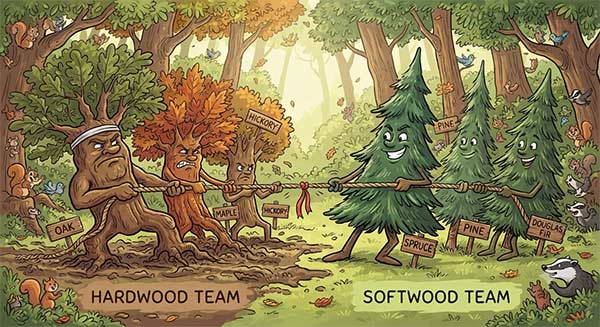
The Short Answer?
For most pellet stove owners, premium softwood pellets often produce more heat, less ash, and cleaner burns than hardwood pellets.
Surprised?
Many people assume hardwood pellets must be better because hardwood firewood has long been considered the premium choice for wood stoves. But pellet fuel is an entirely different product, and the same rules simply don’t apply.
Myth: Hardwood Pellets Are Better
This is probably the most common misconception we hear.
The myth comes from traditional firewood. Dense hardwood logs like oak and maple generally burn longer than softwoods like pine or spruce in a conventional wood stove.
But wood pellets aren’t logs.
Pellets are manufactured fuel made by compressing dried wood fiber under tremendous pressure. During the manufacturing process, differences that matter with firewood become far less important than the quality of the raw material and the manufacturing process.
Hardwood vs. Softwood Pellets: Side by Side
Here’s how premium pellets of each type typically compare:
| Premium Hardwood Pellets | Premium Softwood Pellets | |
|---|---|---|
| Heat output (BTUs/lb) | ~7,700–8,300 | ~8,000–8,800 |
| Ash content | ~0.5–1.0% | Often under 0.5% |
| Ignition | Standard | Faster — higher resin content ignites quickly |
| Lignin (natural fuel binder) | Lower | Higher — more energy per pound |
| Stove cleaning | Regular | Less frequent |
Fact #1: Most Modern Pellet Stoves Burn Both
Nearly every pellet stove sold today is designed to burn either hardwood or softwood pellets.
Your stove doesn’t care what species of wood the pellet came from.
What matters is that the pellets are:
- Low in moisture
- Low in ash
- High in heat output (BTUs)
- Consistently manufactured
Those characteristics have a much greater impact on stove performance than whether the wood was hardwood or softwood.
Fact #2: Quality Matters More Than Species
A premium hardwood pellet will outperform a poorly made softwood pellet.
Likewise, a premium softwood pellet will outperform a low-quality hardwood pellet.
That’s why WoodPellets.com focuses on quality first.
For our exclusive CleanFire brand, we partner only with pellet manufacturers that use clean raw materials, maintain strict production standards, and consistently produce premium pellets. Every product we sell is independently tested and verified for:
- Heat output (BTUs)
- Ash content
- Moisture content
Fact #3: Premium Softwood Pellets Often Burn Hotter
Here’s something many people don’t expect:
Premium softwood pellets frequently produce higher BTU ratings than hardwood pellets.
How is that possible?
Softwood naturally contains more lignin—the substance that binds wood fibers together. Lignin is energy-rich, which helps premium softwood pellets produce excellent heat output while also creating durable pellets during manufacturing.
The result is often:
- Higher heat output
- Faster ignition
- Cleaner combustion
- Excellent overall performance
Fact #4: Softwood Pellets Often Produce Less Ash
Many premium softwood pellets also produce less ash than comparable hardwood pellets.
Less ash means:
- Less frequent stove cleaning
- Better airflow
- More efficient combustion
- Less maintenance throughout the heating season
For many homeowners, this becomes one of the biggest reasons they continue buying premium softwood pellets year after year.
“But What About Creosote?” — The Pine Sap Myth
This is the other half of the hardwood myth, and it deserves a direct answer.
Wood stove owners were taught for generations to avoid burning pine because its sap could contribute to creosote buildup in the chimney. So it’s natural to worry that softwood pellets carry the same risk.
They don’t. Here’s why:
- Creosote comes from moisture and incomplete combustion — not from wood species.
- It forms when damp wood smolders at low temperatures, sending unburned gases up the flue.
- Premium pellets are kiln-dried to very low moisture (typically 4–6%) — a fraction of even well-seasoned firewood.
- Pellet stoves burn hot and efficiently, with forced-air combustion that leaves very little unburned material.
- The natural resins in softwood aren’t a hazard in pellet form — they’re fuel. They burn completely and contribute to softwood’s higher heat output.
The result: premium softwood pellets burned in a properly maintained pellet stove produce no more creosote than hardwood pellets — and far less than firewood of any species.
“Won’t Softwood Burn Too Fast?”
Another holdover from firewood thinking.
In a wood stove, you load logs and let them burn — so denser hardwood lasts longer. But a pellet stove feeds fuel automatically at a controlled rate. Burn time is determined by your stove’s feed setting, not by wood species.
In fact, because premium softwood pellets deliver more heat per pound, many stove owners find they can run a lower feed setting to reach the same room temperature — which can mean burning fewer pellets, not more.
So Which Pellet Should You Buy?
Our recommendation is simple:
Don’t choose a pellet based solely on whether it’s hardwood or softwood. Choose a premium pellet that’s engineered to deliver consistent performance.
That’s exactly why we offer the exclusive CleanFire® line of premium wood pellets.
Rather than forcing homeowners to choose between “hardwood vs. softwood,” CleanFire offers three premium fuels—each manufactured to the same exacting quality standards and backed by independent testing for heat output, ash content, and moisture.
CleanFire — Good • Better • Best
CleanFire Hardwood
A dependable, high-quality hardwood pellet that delivers consistent heat and reliable performance at an excellent value.
Best for: Budget-conscious homeowners looking for dependable everyday heating.
CleanFire Softwood
Produces higher heat output and lower ash than many traditional hardwood pellets, making it an excellent balance of performance and value.
Best for: Homeowners who want more heat with less stove maintenance.
CleanFire Douglas Fir
Our premium Douglas Fir pellet delivers exceptional heat output, ultra-low ash, and outstanding consistency. It’s the choice for customers who want the highest level of performance from their pellet stove.
Best for: Homeowners who demand maximum heat, minimal ash, and premium performance.